Engine rooms are among the most demanding environments on any vessel. Fuel oil, lubricating oil and hydraulic fluid circulate under pressure through dense pipework, often close to exhaust components and other hot surfaces. A small failure at a flange or joint can quickly become a serious fire hazard.
Anti splash tape serves as a vital protective solution to mitigate the risk of high-pressure oil and fuel spray. Applied to suitable pipe connections, it helps contain or redirect spray before it reaches hot machinery. Its effectiveness still depends on correct product selection, proper installation and regular inspection. This article explains the risks, how the tape helps and where it fits within a wider safety approach. Bian Soon Trading (BST) has supplied the marine industry from Singapore since 1980, including Anti splashing tape for engine-room applications.
A vessel’s engine room integrates extreme heat, pressurised fuel, and heavy machinery within a confined space, creating an environment susceptible to rapid fire ignition and spread. Access can also be challenging during an emergency, making it essential to understand the main fire hazards and how to control them.
Several factors combine to make the engine room a high-risk space:
In this setting, even a minor failure can create hazardous conditions, particularly when it happens near an ignition source.
Not all leaks carry the same level of risk. The difference between a slow leak and a pressurised spray is significant.
| Factor | Slow leak | Pressurised spray |
|---|---|---|
| Release pattern | Drips or seeps near the source | Fine jet or mist projected outwards |
| Distance travelled | Short | Can reach nearby equipment |
| Detection | Often visible as pooling | May be missed until contact occurs |
| Fire risk | Moderate | High, especially near hot surfaces |
When oil escapes under pressure, it can atomise into fine droplets that spread widely and ignite far more readily than a liquid pool. Should atomised mist contact hot exhaust manifolds, engine surfaces, or electrical components, catastrophic ignition can occur. Preventing spray from reaching hot surfaces is therefore a central principle of engine-room fire prevention.
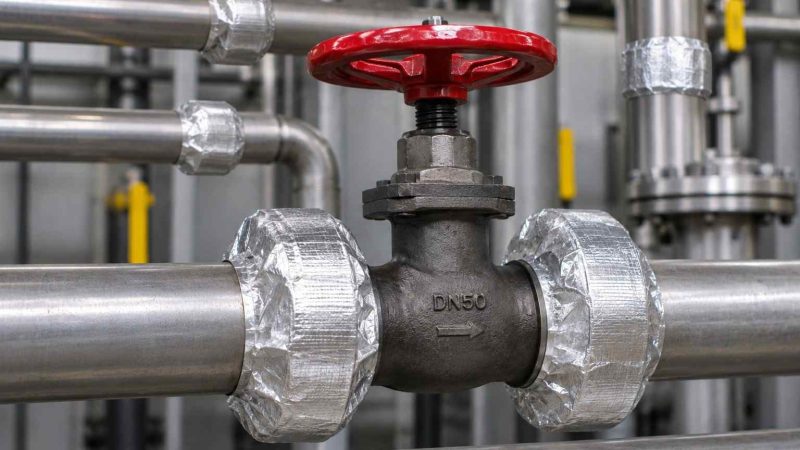
Anti splash tape is a multilayer protective tape wrapped around pipe joints, flanges and fittings carrying flammable fluids. If a gasket or seal fails, the tape helps restrain the jet of fluid and prevents it from spraying outwards onto surrounding equipment. In many cases the fluid is directed to a safer area.
It is widely used in marine and offshore piping and machinery applications. Crucially, anti splash tape functions strictly as a secondary containment measure rather than a permanent repair. A leaking joint must still be investigated and corrected. The tape reduces the consequences of a failure while the underlying issue is addressed.
When correctly specified and applied, the tape supports engine-room safety in several ways:
Because it can be applied quickly on board, it is also useful during maintenance periods, when joints have been opened and refitted.
| Location | Typical use |
|---|---|
| Fuel oil piping | Flanges and joints on supply, return and filling lines |
| Lubricating oil lines | Connections near pumps, filters and coolers |
| Hydraulic piping | Fittings and joints under operating pressure |
| Valves and fittings | Vulnerable points in the pipe run |
| Areas near hot surfaces | Pipework close to exhausts, steam lines or heaters |
Suitability depends on the tape’s specifications, the operating pressure and temperature, and the requirements of the vessel and its class society. Always check these before application.
Properly deployed, high-grade splash tape significantly enhances operational safety for maritime crew and engineering personnel, particularly in engine rooms where pressurised oil and fuel lines run close to hot machinery and personnel.
Compared with fabricated shields or guards, tape supplied in rolls can protect several locations without prior measurement or long lead times.
Correct application is essential. Adhering to standard installation protocols provides a critical operational baseline:
Tape that has been disturbed during maintenance should never be assumed to be effective. Reapply it as part of the job.
Anti splashing tape is one layer of protection, not a complete solution. It performs best alongside other measures:
Compliance is equally important. SOLAS Chapter II-2 requires flammable oil piping to be protected against spray onto hot surfaces or other ignition sources. Operators should confirm that any product used is suitable for their vessel and acceptable to their classification society.
BST supplies Anti splashing tape within the premium Spray Stop Standard range, a high-performance laminated multilayer aluminium barrier designed to prevent fluid spray-outs designed by safety specialists to help prevent spray-outs of oil and fuel from tubing systems. As a marine supplier, we also support customers with fast, efficient service and responsive enquiry handling.
| Specification | Detail |
|---|---|
| Model / SKU | Anti Splashing Tape / 871802 |
| Construction | Laminated multilayer aluminium |
| Maximum pressure | Up to 15 bar |
| Regulation | Complies with IMO A653 (6) |
| Widths (10 m rolls) | 35 mm, 50 mm, 75 mm, 100 mm, 140 mm, 250 mm |
The range of widths allows teams to match the tape to flange size and application.
Oil and fuel spray in the engine room is a well-recognised route to fire, particularly when it reaches hot surfaces. Anti splash tape provides an additional layer of splash protection around vulnerable joints, flanges and fittings, helping to protect people, machinery and the vessel itself.
Ship operators and marine maintenance teams should select products according to application, pressure rating, certification and manufacturer specifications, then install and inspect them diligently. For product advice or a quotation, contact BST at enquiry@bst.com.sg or call (+65) 6294 8071.