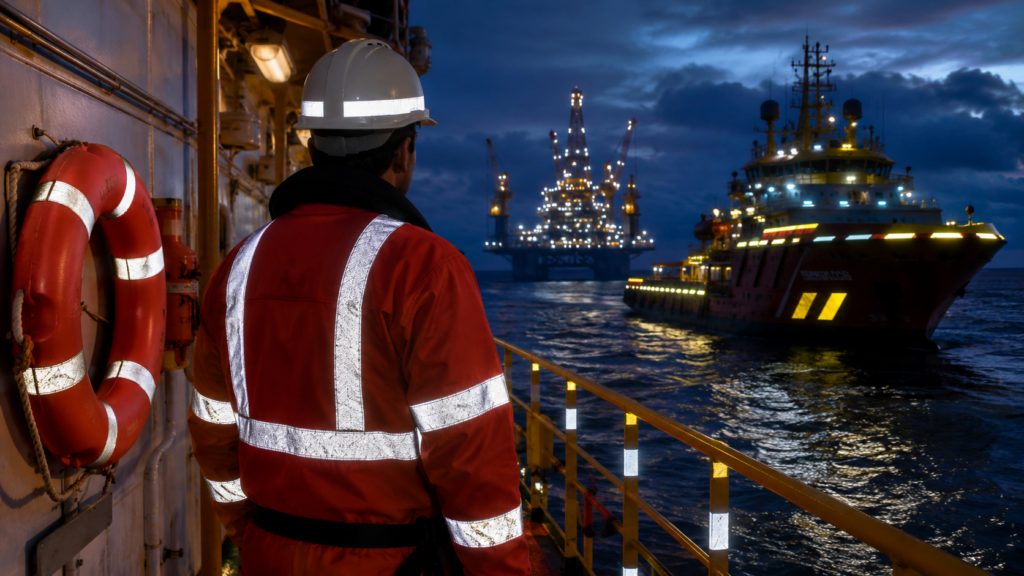
Reflective tape is essential for ship and offshore platform safety. It helps crew members see emergency routes and avoid dangers when visibility is poor. This tape reflects light and marks important safety areas that protect lives.
Working on ships is dangerous. Crew members work on decks during rain, wind and complete darkness. Equipment can move during storms. Emergencies happen without warning. In these situations, clear safety markings can prevent serious accidents or save lives.
The ocean creates many safety challenges for crew members. Ships deal with heavy fog that limits visibility to just a few metres. Night shifts mean workers operate in complete darkness. Power failures can stop all lighting systems. Workers must navigate these dangerous conditions safely without injuring themselves.
Reflective tape solves these problems:
The International Maritime Organisation sets strict safety rules for ships. These rules require reflective markings on lifeboats, life rafts and emergency exits. Ships must follow these standards to operate legally. More importantly, these standards work. They reduce accidents and save lives.
Consider a crew member who must secure loose cargo during a storm. Visibility drops to only a few metres. Wind and rain make conditions terrible. Without reflective markings, the worker cannot see where to step safely. One wrong step could cause serious injury. Reflective tape shows the safe path and prevents tragedy.
Not all reflective tape works the same way. Ships need different types than office buildings or roads. Each type reflects light differently based on its design and purpose.
SOLAS stands for “Safety of Life at Sea.” This is the best-quality tape available. It meets strict international maritime standards. Ships use SOLAS grade tape for lifeboats, life rafts and important emergency signs.
This grade handles harsh ocean conditions:
SOLAS tape keeps its glow and colour for years, even in harsh conditions. It reflects light back to the source, making markings visible from far distances. The adhesive sticks firmly even when covered with salt water and moisture.
Diamond grade tape offers good performance at a lower cost. It works well for general ship markings where SOLAS grade is not necessary. Workers use it to mark stairs, steps and hallway routes.
Diamond grade features include:
This grade provides strong visibility at a reasonable cost. It marks arrows showing crew routes to safety stations. It outlines railings and deck edges to prevent falls.
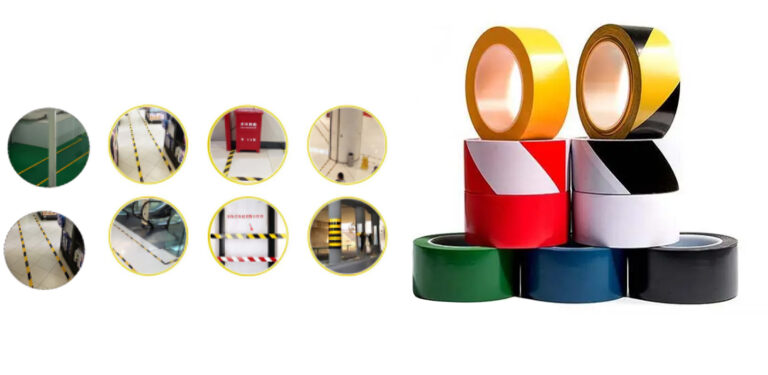
Safety requires attention-grabbing markings. Hazard warning tape uses bright yellow and black stripes to get immediate notice. This colour combination works in all lighting conditions.
Hazard warning tape marks:
The bold stripe pattern demands attention immediately. Even tired crew members notice these warnings. The bright colours provide contrast that works even in dim lighting and shadows.
Ships face harsh environmental conditions that destroy ordinary safety materials. Salt water, heat, cold and sun damage attack every surface. Offshore platforms experience even worse conditions with constant moisture and strong winds.
Salt water damages adhesives and backing materials. Sun radiation fades colours and weakens materials. Temperature changes from hot to cold stress in every part of the tape. Rough seas wash saltwater across all surfaces constantly.
Quality tape survives these attacks through the following:
Low-cost tape fails within one or two years in these conditions. The adhesive breaks down. Colours fade to grey. Edges peel away from surfaces. Crew members miss hazard warnings on damaged markings. The money saved at first disappears when accidents happen because safety markings failed.
Maritime safety regulations exist because ships once sank without proper safety systems. People died in darkness because they could not find escape routes. History shaped the rules we follow today.
International maritime law requires:
Classification societies like Lloyd’s Register regularly inspect ships. They verify that reflective tape meets required standards. Ships cannot receive certification without proper markings. Insurance companies demand valid certificates. Ports refuse entry to unmarked vessels.
These regulations protect more than just crew members. They protect cargo, coastal communities and other ships. A ship in distress uses reflective markings to signal other ships from kilometres away. This system saves lives across entire shipping fleets.
Walk across any modern ship and reflective tape appears everywhere. It serves practical purposes in daily operations and emergency situations.
Common uses include:
On offshore platforms, workers depend even more on reflective markings. These structures operate 24 hours a day, including night shifts. Oil and gas platforms operate in remote locations where rescue cannot arrive quickly. Proper safety markings reduce injuries and prevent serious accidents.
Reflective tape works only when properly installed and maintained. Poor installation causes early failure. Neglected tape loses effectiveness quickly.
Installation steps:
Maintenance requirements:
Regular maintenance protects your investment. Salt spray attacks adhesives constantly. Sun bleaches colours over time. Heavy foot traffic wears surfaces. Monthly inspections catch damage before it becomes dangerous.
Choose tape based on location and purpose. Lifeboat stations need SOLAS grade because lives depend on reliable markings. General deck areas might use diamond grade for cost savings. Hazard zones need bold yellow and black combinations.
Consider your specific environment:
Reflective tape transforms ships into clearly marked spaces where crew members navigate safely. It guides workers to emergency exits. It warns of hazards that could cause serious injury. It meets international regulations that protect lives.
The ocean shows no mercy to unprepared ships. Proper reflective markings cost little compared to treating injuries or investigating accidents. They cost nothing compared to a life saved.
Investing in quality reflective tape invests in crew safety and vessel reputation. Your crew deserves to see safety markings in complete darkness. Your vessel deserves materials that work through every storm.